
 PDF Download
 PubReader
 Export Citation
 Email the Author
 Share Facebook
 Share Twitter
 Cited by 0 Article
 Metrics (View:2,318)







서 론
맥주는 물, 차, 커피에 이어 세계에서 네 번째로 많이 소비되는 음료이며, 생산 과정에서 연간 약 3,900만 톤의 맥주박이 발생한다. 이는 전체 양조 부산물의 약 85%를 차지하며, 맥아보리에서 맥즙을 분리한 뒤 남는 고형 잔류물이다[1–3]. 맥주박은 수분 함량이 높고 쉽게 미생물에 오염되며, 운송 비용 또한 크기 때문에 주로 양조장 인근에서 가축 사료로 활용된다[4]. 실제로 단백질과 섬유질이 풍부하고 가격이 저렴하여, 젖소·돼지·가금류 사료로 사용 시 생산성 향상에 기여한다[5]. 현재 약 70%가 사료로 이용되며, 나머지는 바이오가스 생산이나 매립으로 처리된다. 그러나 매립 시 톤당 약 513 kg의 CO2가 배출되어 심각한 환경 문제를 초래하여 지속가능한 자원 활용 측면에서 개선이 요구된다[6].
최근 순환경제와 푸드업사이클링 개념이 확산되면서, 산업 부산물을 단순 처리하는 대신 고부가가치 자원으로 전환하려는 노력이 활발해지고 있다. 맥주박은 풍부한 페놀성 화합물과 항산화 활성을 가져 화장품 원료나 천연 항산화제로 활용될 수 있으며, 헤미셀룰로오스는 심혈관 질환 예방, 면역 증진 등 다양한 생리활성을 제공한다. 또한, 바이오에너지(바이오가스, 바이오에탄올, 바이오오일 등) 생산, 퇴비 및 토양개량제, 암모니아 저감 소재, 생분해성 플라스틱 소재로 활용할 수 있어 에너지·농업 분야에서도 잠재적 가치를 가진다[6,7]. 하지만, 현재 맥주박 활용은 저부가가치 분야에 집중되어 있으며, 기능성 소재나 플랫폼 화합물 등 고부가가치 제품으로의 전환은 아직 초기 단계에 머물러 있다.
따라서 본 연구에서는 안정적 공급원, 낮은 원료 비용, 풍부한 기능성 성분을 가진 맥주박의 자원화 가능성을 다각적으로 검토하고, 이를 바탕으로 환경적 부담 완화와 지속가능한 고부가가치 제품 개발에 대한 전략을 제시하고자 한다.
연구 개발 현황
맥주박의 구성성분은 보리 품종, 수확 시기, 양조 공정 중 첨가물에 따라 달라질 수 있으나, 전반적으로 리그노셀룰로오스 기반 바이오매스로서, 건조 기준 셀룰로오스(16%–25%), 헤미셀룰로오스(28%–35%), 리그닌(7%–27%)으로 구성된다[1]. 주요 다당류는 xylan, galactan, mannan 순으로 구성되어 있으며, 특히 헤미셀룰로오스는 arabinoxylan이 풍부하여 프리바이오틱 활성, 혈당 조절 개선, 항산화 활성 등 다양한 생리활성 기능을 가진다[6]. 단백질 함량이 약 30%로, 보리나 밀보다 약 2배 높아 빈곤 지역의 영양 공급원으로 활용이 가능하다[6]. 미네랄은 마그네슘(Mg), 인(P), 황(S), 칼륨(K), 칼슘(Ca)이 있으며, 특히 인과 칼륨이 풍부하여 전체 미네랄 함량의 60% 이상을 차지한다[8]. 단백질 및 미네랄 성분은 강력한 항산화 효과를 제공하며, 과립형태로 제조하여 재활용 소재 및 토양개량제로 사용이 가능하다[8]. 따라서, 맥주박은 지속가능성과 산업화 관점에서 유망한 재생가능한 고부가가치 제품 생산 소재로 활용이 가능하다.
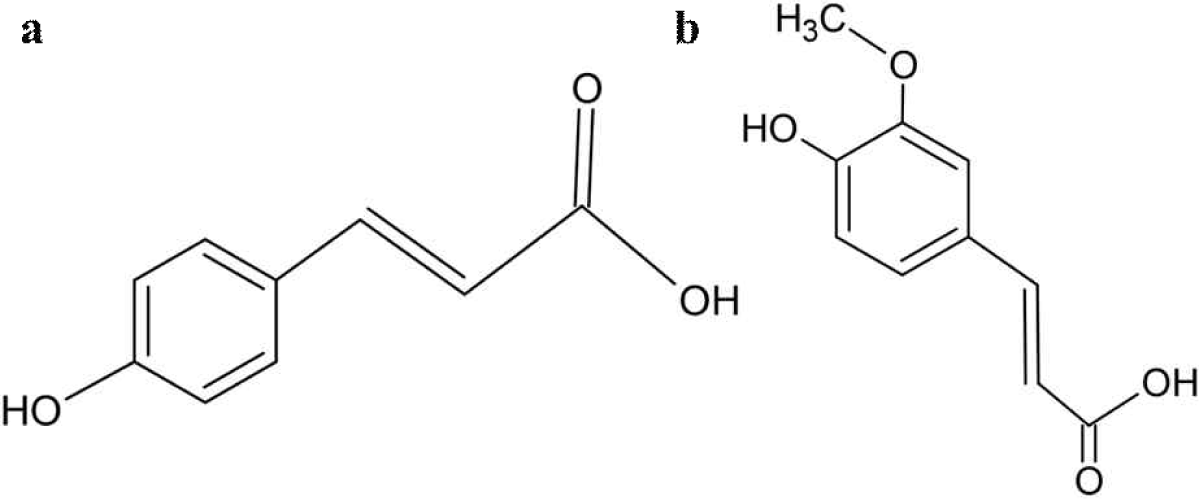
맥주박의 대표적인 페놀성 화합물은 하이드록시신남산(hydroxycinnamic acid) 계열로, 항염증, 항암, 항당뇨 등 다양한 생리활성을 나타낸다[9]. 페룰산(ferulic acid)과 p-쿠마르산(p-coumaric acid)이 가장 대표적이며(Fig. 1), 보리 껍질의 세포벽 내 다당류와 에스터 결합으로 존재하여 양조 과정 후에도 상당량이 맥주박에 잔존한다[9–11]. 페룰산과 p-쿠마르산은 독성이 없어 식품, 제약, 화장품 산업에서 항산화제, 항염증제, 보존제로 활용이 가능하다[12].
맥주박에서 p-쿠마르산을 추출하는 방법은 화학적 전처리, 열수 전처리, 초음파 전처리, 생물학적 전처리가 있다. 생물학적 전처리는 단독으로 사용할 경우 p-쿠마르산 추출이 제한적이며, 화학적 전처리는 많은 양의 시약을 소모한다는 단점을 가지고 있다[9]. 반면에, 열수 전처리는 용매를 물로 사용하여 환경 친화적이며, 초음파 전처리는 환경 친화성과 낮은 운영 비용 등의 장점을 가지고 있다[9,13]. 맥주박에서 p-쿠마르산 추출 전처리 방법은 Table 1에 나타냈다.
| Method | Treatment conditions | p-Coumaric acid yield | Reference |
|---|---|---|---|
| Hydrothermal pretreatment | 210°C, 15 MPa, 2.0 s | 1.4 g/kg | [9] |
| Alkaline pretreatment | 72% H2SO4 (120°C, 15 min), 2% NaOH (40°C, 4 h) | 0.6 g/kg BSG | [9] |
| Sonication pretreatment | 600 W, 30 min, room temperature | 0.1 mg/g | [13] |
| Ultrasound assisted extraction | 65% EtOH (37 kHz, 50 min, 80°C) | 0.12 mg/L | [14] |
p-쿠마르산은 자유 라디칼을 직접적으로 중화하여 산화 스트레스를 억제하는 항산화 활성을 지니며, 만성 질환 및 세포 노화로 이어질 수 있는 손상으로부터 보호한다[15]. 산화 스트레스는 고지혈증, 심혈관 질환, 제2형 당뇨병 등 질환의 주요 원인이 된다. p-쿠마르산의 항산화 기능은 산화 스트레스로 인한 질병을 예방할 수 있다[15]. 외상성 뇌손상 마우스 모델에 p-쿠마르산(100 mg/kg)을 경구 투여하였을 때, 공간 기억 저하를 개선하였고, 해마 DG(dentate gyrus) 내 신경 세포 보존과 CAT(catalase), GPx(glutathione peroxidase) 등의 항산화 효소 활성 회복을 통해 신경보호 효과를 확인하였다. 외상성 뇌손상은 높은 유병률과 외상 후 인지 기능 저하를 유발하지만, 이를 치료할 수 있는 치료제가 아직 개발되지 않았다. 따라서, p-쿠마르산은 외상성 뇌손상에 의한 인지 기능 저하를 완화할 수 있는 치료제로 활용이 가능하다[16].
쥐 부신수질 종양에서 유래한 PC12 세포에 p-쿠마르산과 AAPH(hydrogen peroxide or 2,2′- azobis(2-methylpropionamidine)dihydrochloride)를 처리한 결과, AAPH 처리군에서 세포 내 활성산소(reactive oxygen species, ROS) 수치가 증가하였고, p-쿠마르산 처리(125, 250 μg/mL) 시 ROS 수치가 약 10% 감소하여 산화 스트레스 억제 효과를 확인하였다. 또한, 고지방 식이를 한 마우스 모델에게 p-쿠마르산 50 mg/kg을 투여하였을 때 혈청의 총 항산화 능력(T-AOC)과 CAT 활성이 회복되었으며, 간의 GPx 수치가 증가하였다. 이를 통해 p-쿠마르산이 고지방 식이에 의한 산화 스트레스와 고지혈증을 완화할 수 있음을 확인하였다[15].
페룰산은 알칼리 전처리, 열수 전처리, 생물학적 전처리 등을 통해 추출 가능하며 맥주박에서 페룰산 추출 전처리 방법은 Table 2에 나타냈다. 알칼리 가수분해는 저비용의 보편적 방법이지만, 처리 시간이 길고 화학약품 회수에 한계가 있고, 효소가수분해는 환경 친화적이지만 효소 가격이 높다는 단점이 있다[9,17]. 반면에, 열수 전처리는 물을 용매로 활용하는 저비용, 친환경 전처리 방법으로 최근 주목받고 있다[9,17].
| Method | Treatment conditions | Ferulic acid yield | Reference |
|---|---|---|---|
| Hydrothermal pretreatment | 209°C, 148 bar, 0.8 s | 7.2±1.1 g/kg | [7] |
| 210°C, 15 MPa, 2.0 s | 7.2 g/kg | [9] | |
| Alkaline pretreatment | 72% H2SO4 (120°C, 15 min), 2% NaOH (40°C, 4 h) | 5.5 g/kg | [9] |
| 2 M NaOH (50°C, 3 h) | 6.1±0.6 mg (0.0061 g) | [11] | |
| 2% NaOH (120°C, 90 min) | 46.17 mg (0.046 g) | [17] | |
| Biological pretreatment | Endoxylanase | 4.3 g/kg | [9] |
| Esterase enzymes | 0.0069–0.0070 g/100 g | [17] | |
| Depol 740, Depol 686 | 0.42 g/100 g | [17] |
페룰산은 탁월한 항산화 성능으로 라디칼 소거 및 자외선 차단 효과를 가지며, 각질 형성세포, 섬유아세포, 콜라겐, 엘라스틴 등 피부의 주요 구성 성분을 보호한다[7,18]. 또한 자유라디칼 생성을 억제하고, 항산화 효소 활성을 촉진하여 광노화를 지연시켜, 미백 및 항노화 기능성 화장품의 원료로 활용되고 있다[12,18].
쥐 흑색종(B16-F10) 세포 실험에서 페룰산와 p-쿠마르산이 α-멜라닌 세포 자극 호르몬(α-MSH)에 의해 유도된 멜라닌 생성을 억제하여 미백 기능성을 입증하였다. 임상시험에서도 페룰산 필링 치료 후 피부 탄력 증가(20%–35%)와 피부 거칠기 감소를 확인하였다[2,19].
또한, APAP(acetaminophen) 유발 간 손상 마우스 모델에 페룰산을 투여하였을 때 ALT(alanine aminotransferase)와 AST(aspartate aminotransferase) 수치가 감소하고, 간 조직 내 MDA (malondialdehyde) 함량이 줄어들어 산화 스트레스가 완화됨을 확인하였다[20].
마우스 대식 세포(Raw 264.7)를 활용한 실험에서 페룰산이 iNOS(inducible nitric oxide synthase) 발현과 NO(nitric oxide) 생성을 억제하여 항염증 효과를 나타낸다고 보고하였다[21]. 또한, 니코틴 처리 마우스 모델에서 COX-2(cyclooxygenase-2) 발현이 감소하여 폐, 간 염증이 완화되었으며, 알츠하이머병을 가진 마우스 모델에게 페룰산(5.3 mg/kg/일) 투여하였을 때 아밀로이드 침착과 염증 인자(IL-1β)가 감소하고, 기억력·인지 기능이 개선의 효과를 확인하였다[22]. 임상시험을 통해서 경도인지장애 환자의 인지 점수가 개선되었으며, 이를 통해 페룰산의 알츠하이머병 예방 및 치료 보조제로의 가능성을 확인하였다[21,23].
최근 연구에 따르면 페룰산은 빠른 대사 문제로 혈중에 오래 유지되지 못하고 빠르게 분해, 배설되어 낮은 생체 이용률 문제가 있다. 따라서, 이를 해결하기 위해 고분자 기반 나노운반체(chitosan, polycaprolactone, polyvinylpyrrolidone, hyaluronic acid 등)에 페룰산을 고정화하여 안정성, 약물 전달 효율, 항균 활성 등을 향상시키는 연구도 활발히 진행되고 있다[24].
따라서 p-쿠마르산은 항산화 및 신경보호 효과를 통해 질병 예방과 치료에 활용될 수 있으며, 산화 스트레스와 관련된 심혈관 질환, 당뇨병, 신경계 질환의 발생을 억제할 수 있다. 페룰산은 항산화제, 항염증, 신경 보호, 피부 개선 등 다각적 효능을 가진 고부가가치 성분으로 활용이 가능하다. 맥주박 기반의 생리활성 물질의 추출 및 활용은 제약, 식품, 화장품 산업의 새로운 원료를 공급할 수 있는 잠재적 전략으로 평가된다. 하지만 맥주박 기반의 생리활성 물질의 상업화를 위해서는 효율적이고 경제적인 추출 및 정제 기술 개발과 생체 이용률 개선을 위한 제형화 연구가 병행되어야 한다.
급격한 산업화와 인구 증가로 화석연료 소비가 급증하면서 자원 고갈, 지구 온난화, 기후 변화 문제가 심화되고 있다. 이에 따라, 친환경적이고 지속 가능한 탄소 중립 에너지원에 대한 관심이 높아지고 있다. 바이오에너지는 바이오가스, 바이오에탄올, 바이오오일 등을 포함하며, 이는 바이오매스 기반으로 생산 가능하고 화석연료를 대체할 친환경 에너지원이다(Table 3). 맥주박은 수분, 단백질, 당, 섬유질이 풍부하여 미생물 분해가 용이하고, 양조산업의 부산물로서 대량 생산 및 안정적인 공급이 가능하다는 장점이 있다. 맥주박은 혐기성 소화 공정을 통해 바이오가스로 전환될 수 있으며, 생성된 바이오가스는 메탄(CH4) 55%–75%, 이산화탄소(CO2) 25%–45%, 소량의 황화수소(H2S)로 구성된다[25].
| Substrate | Product | Reference | ||
|---|---|---|---|---|
| Biogas | BSG:CD (1:3) | 54.7% CH4 | [28] | |
| BSG | 24.7% CH4 0.062–0.082 Ndm3 CH4 g–1 VS |
[25,28] | ||
| CD | 27.4% CH4 | [28] | ||
| SS | 0.45 Ndm3/g VS | [29] | ||
| SS+10 g BSG | 0.69 Ndm3/g VS | [29] | ||
| SS+5 g BSG | 0.57–0.59 Ndm3/g VS | [29] | ||
| BSG+JA | 0.086-0.108 Ndm3 CH4 g–1 VS | [25] | ||
| Bio ethanol | Acid treatment | 0.5 N H2SO4, 50°C, 16 h | 39.5±2.8% | [1] |
| 130°C, H2SO4 (1% w/v), 26 min | 18.1 kg | [3] | ||
| Alkaline treatment | 0.5 N NaOH, 50°C, 16 h | 7.9±0.03% | [1] | |
| Acid+Biolgical treatment | 50°C 16 h, 0.7 NH2SO4, CellicCTec2 | 45.56% | [1] | |
| Bio oil | Pyrolysis | 520°C, 6 s | 49 wt% | [31] |
| 650°C, 30°C/min | 60.7% | [32] | ||
혐기성 소화는 (i) 가수분해 단계에서 유기물이 분해되고, (ii) 산 생성 단계에서 아세트산, 부티르산, 프로피온산 등 휘발성 지방산으로 전환되며, (iii) 메탄 생성 단계에서 메탄생성균에 의해 최종적으로 메탄과 이산화탄소가 생성되는 과정으로 진행된다[5].
그러나 소화 과정에서 생성되는 p-크레졸은 메탄생성균 활성을 억제하여 바이오가스 수율을 저하시킬 수 있다[26].
2단계 공정(고체 혐기성 소화+입상 바이오매스 반응기)을 적용하면, p-크레졸이 10–45 mg/L 범위에서 10일 이내 완전히 분해되어 메탄생성균의 독성 저해가 억제되고, 장기적 안정적 메탄 생산이 가능하다[10,27].
또한, 맥주박은 단백질과 질소 함량이 높아, 단독 소화 시 C/N 비율 불균형으로 인한 암모니아 독성 위험이 있다. 이를 해결하기 위해 다른 기질과 공동소화(co-digestion)를 적용하면 공정 안정성과 메탄 수율이 향상된다. 맥주박과 우분을 1:3 비율로 혼합했을 때 메탄 함량이 약 55%로 증가하여 단독 소화보다 가스 품질이 개선되었으며, 하수슬러지와 공동 소화할 경우 가스 발생량이 0.45 L/g에서 0.69 L/g으로 50% 이상 증가하였다[28,29].
따라서, 공동소화를 통해 맥주박의 높은 단백질 함량과 다른 기질의 탄소원을 보완하여 시너지 효과를 낼 수 있다. 맥주박은 효모와 발효 잔류물을 함유하고 있어 발효를 통해 바이오에탄올로 전환할 수 있다[3]. 그러나 맥주박의 높은 헤미셀룰로오스와 리그닌 함량은 효소의 셀룰로오스 접근을 방해하고, 효소가 리그닌에 비생산적으로 흡착되어 효소가수분해 효율을 저하시킨다. 따라서 헤미셀룰로오스와 리그닌 제거를 위한 산, 알칼리 등의 전처리 공정이 필수적이다[30]. 산 전처리는 헤미셀룰로오스를 가수분해하여 효소가수분해 효율을 높이며, 알칼리 전처리는 리그닌을 제거하여 셀룰로오스 접근성을 향상시킨다[30].
전처리 후 효소가수분해와 발효를 수행한 결과, 바이오에탄올 수율은 NaOH 전처리에서 7.90%, H2SO4 전처리에서 39.49%로 나타났다[1]. 산 전처리가 더 높은 수율을 나타냈으며, 이는 헤미셀룰로오스 분해가 촉진되어 당화 효율이 향상되고, 발효가 원활하게 이루어졌기 때문이다[1]. 산 전처리의 경우, 헤미셀룰로오스 및 셀룰로오스 회수율이 90% 이상으로 나타났으며, 리그닌 제거율은 낮았다. 알칼리 전처리의 경우 리그닌 제거는 효과적이지만, 당 수율과 에탄올 수율이 낮게 나타났다[1,3].
맥주박은 열분해를 통해 바이오오일 생산이 가능하다. 바이오오일은 산화된 지방족 및 방향족 탄화수소로 구성된 물질로, 기존 화석 연료에 비해 높은 점도, 높은 산소 함량을 나타낸다[31]. 650°C, 30°C/min 조건의 열분해 공정에서 60.7%의 바이오오일 생산 수율을 나타냈다[32]. 바이오오일은 아세트산, 톨루엔, 푸르푸랄 등의 화합물로 구성되어 있어, 화학 산업의 원료로 활용이 가능하다[32]. 520°C에서 열분해하여 49 wt%의 바이오오일을 얻었으며, 열분해를 통해 원료 에너지의 약 57%–63%가 바이오오일에 보존되었으며, 산소 함량은 감소하여 탈산소화가 되었음을 확인하였다[31]. 열분해로 제조되는 바이오오일은 화학 원료로서 가치가 높지만 질소를 다량 포함하고 있어, 연료로 직접 사용할 경우 질소산화물 배출이 증가할 수 있으므로, 연료로 활용하기 위해서는 후속 정제 공정이 요구된다[32].
결과적으로, 맥주박은 바이오에너지(바이오가스, 바이오에탄올, 바이오오일 등) 생산을 통해 재생 가능한 에너지원 확보, 폐기물 매립 감소, 온실가스 저감에 기여할 수 있다. 이는 순환경제 실현과 에너지 전환에 핵심적인 역할을 하며, 바이오리파이너리 플랫폼으로의 확장 가능성을 지니고 있어 산업적·환경적 의의가 크다.
국내 암모니아 배출의 약 80%가 농업부문에서 발생하며, 악취, 황산암모늄 및 질산암모늄을 생성한다. 농업환경에서 암모니아가 발생하는 가장 큰 원인은 가축 분뇨의 분해 과정으로 동물의 소변에 포함된 요소는 토양 미생물이 생성하는 효소(uricase, urease)에 의해 가수분해되어 암모늄 이온과 이산화탄소로 전환된다[33].
알칼리 조건에서는 암모늄 이온이 암모니아 가스로 전환하여 대기 중에서 이동하면서 황산 및 질산을 포함한 에어로졸과 반응해 질산 암모늄과 황산 암모늄을 형성하고, 이는 대기 오염 및 기후 변화 가속화를 초래한다[33]. 따라서 농업환경에서 암모니아 생성을 최소화할 수 있는 방안 개발이 필요하다.
중금속은 산업지역 및 제약공장 인근의 농업 토양에서 환경오염 및 인체 건강에 심각한 위험이 된다[34]. 제약산업에서 발생하는 폐수, 배기가스, 잔류물은 농경지의 중금속 오염의 주요 원인이 된다. 오염원의 기여도를 분석한 결과, 제약폐수(52.37%), 농약 등 농업화학물질(31.14%)과 교통(16.49%)이 각각 중금속 오염에 기여하는 것을 확인하였다[34].
기존의 악취 및 중금속 제거 방법으로는 화학적 침전법, 전기화학적 처리법, 막여과법 등이 있다. 화학적 침전법은 공정이 간단하고 비용이 저렴하여 널리 사용되고 있지만, 2차 오염 가능성이 있고, 미량의 오염물질을 완전히 제거하지 못한다는 단점을 가지고 있다[35]. 전기화학적 방법은 전류를 이용해 화학 반응을 유도하여 오염물질을 제거하고, 막여과법은 반투과성 막을 이용해 오염물질을 물에서 분리하는 기술이다[36]. 그러나 두 방법 모두 비용이 비싸고 다량의 슬러지가 생성된다는 단점을 가지고 있다[36]. 반면에 흡착은 낮은 비용 및 높은 효율성으로 인해 폐수 처리를 위한 유망한 접근 방식이며, 높은 유량을 처리하고 잔류물과 슬러지가 생성되지 않고 고품질의 물을 생산할 수 있어 대규모 적용이 가능하다[37].
맥주박의 낮은 C/N 비율, 높은 수분 함량으로 산소 공급이 어려워 직접적인 퇴비화에는 한계가 있으며, 혐기성 분해에 따른 부패 가능성이 높다[38]. 따라서 이를 해결하기 위해, 맥주박을 탄화하여 바이오차로 활용하는 방안이 제시되고 있다. 탄화 공정을 통해 생산된 맥주박 바이오차는 높은 비표면적과 다공성 구조를 갖게 되어 중금속 및 암모니아 등의 오염물질 흡착에 효과적이며, 토양 개량제로의 적용이 가능하다[39,40]. 또한, 미생물 분해에 저항성을 지닌 고정탄소 형태로 전환되며, 토양에 적용시 암모니아 배출 저감 및 토양 개선의 효과가 있다. 또한, 안정적인 구조와 장기 탄소 저장 능력을 갖추고 있어 탄소 격리 수단으로 활용이 가능하다[40]. 맥주박 바이오차의 활용방안에 대해 Table 4에 제시하였다.
| Carbonization conditions | Biochar effect | Reference | |
|---|---|---|---|
| Soil conditioner | 300°C, 2 h | High electrical conductivity, Short-term soil fertility improvement (water solubility, inorganic ion), and microbial activity promotion | [39] |
| 500°C, 2 h | Structural stability (aromatic carbon content), long-term soil fertility improvement, and superior crop growth (leaf length, width, and fresh weight) | [39] | |
| 500°C, 2 h, MgCl2 | High bacterial fixation adsorption, maintain soil fertility, and plant growth promotion | [41] | |
| Heavy metal adsorption | 700°C, 30 min | Cr adsorption (70 mg/g), and removal of toxic contaminants from liquids | [42] |
| 600°C, 3 h, H3PO4 | High removal rate of Cr (VI) (99.96%) and Cr adsorption (41.27 mg) | [43] | |
| 850°C, 1 h | Adsorption of 5.5 mg/g (Co), 3.0 mg/g (Sr), purification of radioactive contaminated water or water containing heavy metals | [44] | |
| Ammonia reduction | 300°C, 1 h, urea | NH3 emissions from agricultural soils reduced by 30.56%, soil fertility improvement | [40] |
| 600°C, 2 h | NH4+ removal (83.9%) | [45] |
생분해성 플라스틱은 박테리아, 곰팡이 등 미생물에 의해 물, 이산화탄소 등 천연 물질로 분해되어 환경에 장시간 잔류하지 않아 환경오염을 저감할 수 있는 소재이다. 생분해성 플라스틱에는 PLA (polylactic acid), PBS(polybutylene succinate), PBAT(polybutylene adipate-co-terephthalate), PHA(polyhydroxyalkanoates) 등이 있다. PHA 계열에는 PHB(polyhydroxybutyrate), PHBV(polyhydroxybutyrate-co-valerate)가 있으며, 높은 융점과 낮은 산소, 이산화탄소 투과성 가지고 있는 소재이다[46,47]. 그 중 PHB는 높은 결정성, 우수한 기계적 강도 등으로 PE(polyethylene)와 PP(polypropylene) 등 기존 플라스틱을 대체할 수 있다[48]. 맥주박은 단백질과 다당류 함량이 높아 PHB 개발 소재로써 장점을 가지고 있다. 맥주박의 단백질은 기계적 강도와 가교 구조를 형성할 수 있고, 다당류는 성형성과 생분해성 기능을 부여하여 지속 가능한 생분해성 플라스틱 생산의 재료가 된다[3,48].
PHB는 생분해성 폴리에스터에 속하는 고분자로 맥주박을 전처리하여 리그닌과 단백질을 분해하고, 효소가수분해로 당을 생산하고 박테리아를 이용한 발효를 통해 생산이 가능하다[47]. 맥주박의 당을 효율적으로 활용하기 위해서는 화학적 전처리 후 효소가수분해를 수행하면 효소의 셀룰로오스 접근성을 높여 당화 효율을 향상시킬 수 있다[47]. 화학적 전처리는 고온, 고압 조건에서 알칼리, 산성 용액을 사용하여 헤미셀룰로오스를 분해하고, 글루코오스 수율을 높인다[3]. 하지만 이러한 화학적 전처리는 화학약품과 고온, 고압 조건에서 이루어지며, 열화학적 처리 과정에서 일부 헤미셀룰로오스가 손실되는 한계점을 지닌다[49].
플라즈마 버블 전처리는 전기 방전을 통해 액체 속 기포 주변에 플라즈마를 형성하여 발생하는 ROS, RNS(reactive nitrogen species) 등을 활용하여 바이오매스 구조를 분해하는 공정이다. 플라즈마 버블 전처리는 화학약품 등의 용매를 사용하지 않고, 다당류 손실과 폐기물이 발생하지 않아 친환경적인 전처리 방법이다[49]. 맥주박을 활용한 PHB 생산 전처리 방법은 Table 5에 나타냈다.
| Method | Treatment | PHB (g/L) | Reference |
|---|---|---|---|
| Acid+Alkaline pretreatment | 3.5% NaOH (80°C, 60 min), 1.5% H2SO4 (121°C, 25 min) | 5.03 g/L | [47] |
| 1.25% H2SO4 (120°C, 17 min), 2% NaOH (120°C, 90 min) | 7.5 g/L | [50] | |
| Plasma bubble pretreatment | 200 V, 30 min | 2.64 g/L | [49] |
맥주박을 1.25% 황산(120°C, 17 min)으로 전처리하고, 2% NaOH를 이용해 리그닌을 제거하였다. 이후 효소가수분해를 통해 생성된 당을 Cupriavidus necator로 발효를 수행한 결과, 7.5 g/L의 PHB를 생산하였다[50]. 알칼리 전처리로 리그닌을 제거한 뒤, 황산으로 산 가수분해하여 맥주박에서 18.65 g/의 글루코오스를 생산하였다. 이후 글루코오스를 Bacillus subtilis로 발효를 수행한 결과, 5.03 g/L의 PHB를 생산하였다[47]. 플라즈마 전처리(200 V, 30분) 후 효소가수분해로 글루코오스를 생산하였으며, 이를 Paraburkholderia sacchariDSM 17165로 발효를 수행한 결과, 2.64 g/L의 PHB를 생산하였다[49].
향후 연구방향
기존의 맥주박은 주로 가축사료로 활용되어 왔다. 최근에는 다양한 전환기술을 통해 생리활성 물질(페룰산, p-쿠마르산 등), 바이오에너지(바이오가스, 바이오에탄올, 바이오오일 등), 기능성 물질(토양개량제, 흡착소재, 암모니아 저감 소재, 생분해성 플라스틱 등) 등의 고부가가치 소재로 활용이 가능하다. 이외에도 맥주박의 단백질을 활용하여 생분해성 필름 생산이 가능하고, 이렇게 제조된 생분해성 필름은 기존 상업용 생분해성 필름과 비교하여 우수한 기계적 강도와 유연성을 가지고 있다[51]. 또한, 맥주박으로부터 셀룰로오스 나노섬유를 추출하여 제조한 에어로젤은 가볍고 우수한 단열 특성을 지니며, 화학약품을 사용하지 않는 친환경 공정을 통해 생산 가능하여 냉장육 등 온도에 민감한 식품 포장재로 활용이 가능하다[52]. 이처럼 맥주박은 양조 산업 공정에서 지속적이고 대량으로 생산 가능한 바이오매스로, 다양한 전환 기술을 통해 고부가가치의 제품 생산이 가능하다. 이는 폐기물 관리 비용을 줄이는 동시에 자원의 효율성을 높여 순환경제를 촉진할 수 있다.
결 론
맥주박은 양조 과정에서 대량 발생하는 폐기물로, 높은 수분 함량으로 인해 부패가 쉽고 운송 및 보관이 어려워 활용에 한계가 있으며, 폐기물 처리 비용이 발생한다. 따라서 맥주박을 효율적으로 활용할 수 있는 고부가가치 제품 개발이 필요하다. 맥주박은 다양한 유기 고분자를 풍부하게 함유하고 있어, 생리활성 물질, 기능성 물질, 생분해성 필름 등 고부가가치 제품으로 활용할 수 있다. 맥주박의 고부가가치 자원화는 산업 폐기물 처리로 인한 환경 부담을 줄이고, 다양한 산업 분야에서 새로운 부가가치 및 수익 창출 기회를 제공할 수 있다.


